




How to Sign Up for Meta Muse and Use a Referral Code
Muse has recently become one of the most talked-about AI Agent products in the AI tools space. As a new AI Agent from …
Struggling with low views on YouTube? Learn how the YouTube algorithm distributes traffic, why videos fail to get traction, and how to optimize your SEO and retention. Discover advanced strategies for running multiple accounts and scaling your channel efficiently with automation tools.

Get an AI-Powered Summary of This Article
Many YouTube creators run into the same situation: they keep publishing videos, follow trending topics, and improve their editing skills over time, but their views remain stuck at a low level, usually in the tens or hundreds. Likes and comments stay sparse, and it is not always clear whether the video was recommended by the platform at all.
This is not an isolated case. It is often the result of how YouTube distributes traffic.
A common misconception among creators is that strong content will naturally get exposure. In practice, YouTube traffic is not distributed evenly.
Industry data suggests that:
This means that creators are not only competing with similar channels. They are competing with the entire YouTube content ecosystem. The real issue is not whether traffic exists, but which content can enter the core distribution layer.
Under this structure, YouTube growth is less about equal exposure and more about filtering and prioritization.
During the initial distribution stage, the algorithm relies heavily on how identifiable the content is. This includes:
The first goal of YouTube SEO is not ranking. It is helping the system correctly identify what the video is about.
If the content is too vague, the algorithm may not know how to classify it, which limits its ability to recommend it to the right audience.

Once a video enters a small-scale test distribution, the algorithm evaluates user behavior signals, including:
Watch Time: the total time viewers spend watching the video
Retention Rate: whether viewers watch the video through to the end
Engagement: likes, comments, subscriptions, and whether viewers continue watching other channel content
Stayed to Watch in YouTube Shorts: whether viewers stay instead of swiping away, rewatch the clip, visit the creator’s channel, or move into a long-form video
If these signals perform well, the video is pushed into broader recommendation. If not, distribution usually stops expanding.
Within the recommendation system, two factors have a major impact on exposure efficiency:
If CTR(Click-Through Rate) or early retention is weak, even a high-quality YouTube video may struggle to gain lasting exposure.
Based on the recommendation logic above, traffic problems usually fall into three categories.
YouTube is essentially a content matching system. Its main task is to recommend the right video to the right audience.
If a video has:
then the system has difficulty categorizing it. As a result, the video receives very limited recommendation traffic.
Diagnosis questions:
Optimization methods:
Even if a video gets initial exposure, the algorithm will stop recommending it if viewers click away too quickly.
In 2026, YouTube places even more weight on satisfaction signals. That means viewers need to stay.They need to keep watching and interact with the channel.
Optimization methods:
Many creators start from zero with every new video. They do not compare titles, test thumbnails, or analyze hooks. As a result, distribution becomes unstable, and it becomes hard to understand why one video performs better than another.
This is where many channels lose consistency. Without a repeatable workflow, good performance looks accidental, and weak performance cannot be corrected.
Low-cost testing methods for a single channel:
When creators need to test content directions that differ significantly from their main channel, or when they want to create separate strategies for different audiences, a single channel is often not enough.
This is because YouTube’s recommendation system builds audience expectations based on a channel’s history. If a channel changes direction too often, the system receives mixed signals, which can reduce recommendation accuracy.
A practical approach is often to use the main channel for small-scale testing first. Once a content direction shows stable performance, it can then be moved to a separate channel and scaled more aggressively.

Common challenges in multi-account testing:
This is where creators often start looking for a more stable execution layer.
When running multi-variable tests, creators usually face several operational issues:
Environment consistency: multiple channels need independent login environments and IP addresses to reduce account linkage risk
Repeatability: publishing, interacting, and logging data across multiple accounts every day is difficult to maintain manually
Comparability: without a unified view, it is difficult to determine which content strategy is truly effective
At this stage, the focus is no longer just one YouTube video or one thumbnail. The real focus is the overall traffic performance of the account system. Creators need a faster way to identify efficient content directions and scale them consistently.
For this reason, many creators use DuoPlus Cloud Phone to improve execution workflows. Specifically, it helps with:
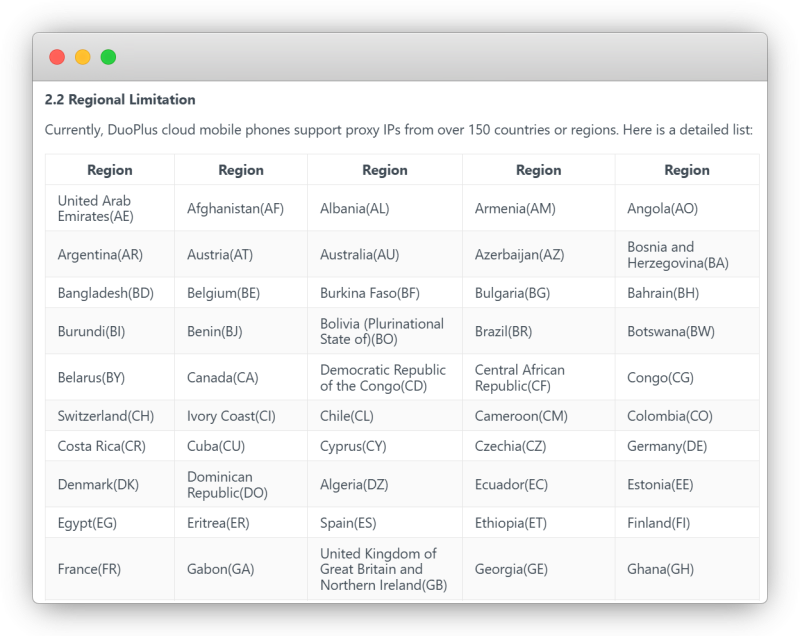
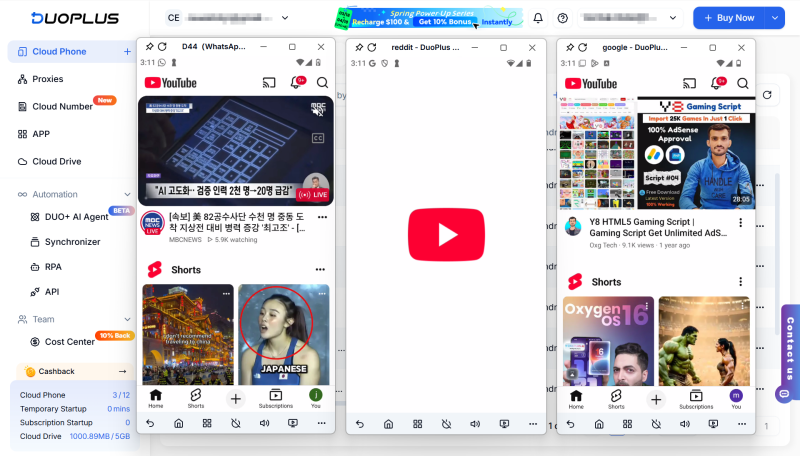
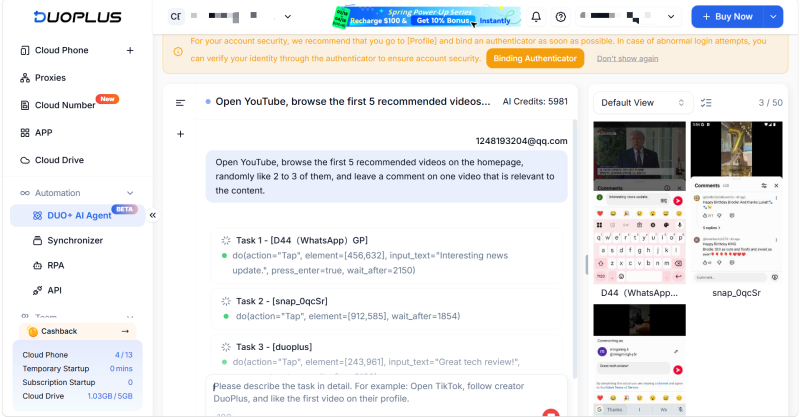
With DuoPlus Cloud Phone, creators can scale validated YouTube strategies more effectively. By combining a stable environment with automation, content optimization and execution can work together more consistently, reducing manual effort and improving growth efficiency.
In the 2026 YouTube ecosystem, content growth is not only about how well a single video performs. It is also about whether the channel can publish consistently, optimize its structure over time, and execute testing and scaling efficiently.
When content, optimization, and execution are connected into a single workflow with DuoPlus Cloud Phone, YouTube traffic becomes more stable and more predictable.
Muse has recently become one of the most talked-about AI Agent products in the AI tools space. As a new AI Agent from …

OpenAI Codex is an AI coding agent designed to help developers write, modify, review, and deliver code. It is available …
VK (VKontakte) is one of the major social media platforms in Russia. In addition to account management, content …
No need to purchase multiple real phones.
With DuoPlus, one person can operate numerous cloud phones and social media accounts from a single computer, driving traffic and boosting sales for you.