
How to Safely Manage Multiple Social Media Accounts Without Getting Banned in 2026
A lot of people still approach multi-account management the way it worked a few years ago — create several profiles, add …


Table of Contents
In the cross-border e-commerce industry, finding cost-effective and reliable suppliers is a key focus for resellers. Many new resellers and entrepreneurs may find it challenging to decide between two major e-commerce platforms: Temu and AliExpress. Both provide a wide array of product categories and competitive pricing, but they each have unique features and advantages.
This article will thoroughly analyze the core differences between Temu and AliExpress, assisting you in identifying the most suitable product offerings and procurement strategies that align with your business model, coupled with the most reliable tools and operational recommendations.
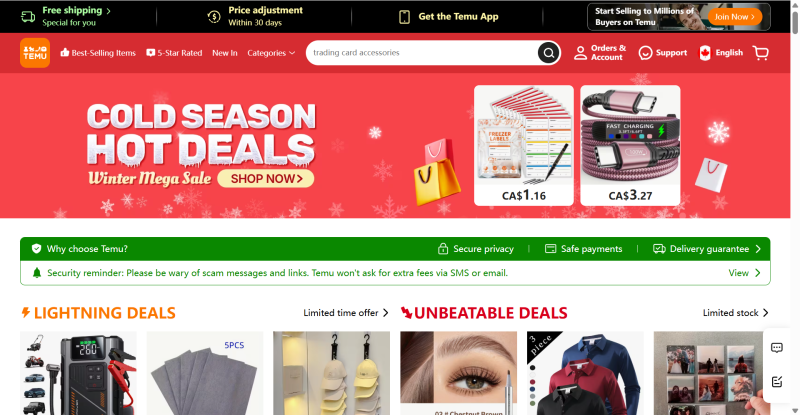
Temu is a new entry in the e-commerce market, launched by Pinduoduo in 2022. It offers low-cost products across multiple categories, including daily necessities, electronics, home goods, and beauty products, with a particular emphasis on time-limited flash sales, large discounts, and gamified shopping experiences. Compared to AliExpress, Temu's supply chain is more directly controlled by the platform, providing competitive pricing for products that are rooted in direct procurement and leveraging large-scale discount strategies on social media.
AliExpress is a global e-commerce platform launched by Alibaba Group in 2010, offering both international buyers and Chinese suppliers an avenue for trade. The product range is extensive, covering electronics, clothing, home goods, and more, catering to long-term operational and diversified selection needs. In terms of cross-border e-commerce, AliExpress resembles a global marketplace’s data repository and selection pool, capable of supporting trade analysis across regions and long-term market studies.

Pricing is always a crucial consideration when selecting cross-border e-commerce products and suppliers. Temu acts as a new e-commerce platform, providing superior pricing advantages due to its direct supplier partnerships. Typically, product prices on Temu are relatively lower than market averages, particularly suitable for resellers and bulk purchase strategies. In contrast, AliExpress has been in the market for many years, with a more dynamic pricing structure suitable for bulk purchases and long-term selection.
Temu:
AliExpress:
Overall, Temu is more suitable for short-term trading and rapid movement, while AliExpress is better for active product selection and long-term procurement strategies.
Product quality is at the core of the retail business, and selecting superior products can attract more customers, resulting in significant profits. Both Temu and AliExpress have unique advantages in product selection:
Temu:
AliExpress:
Cross-border e-commerce sellers can choose Temu for speed and high-demand products, while AliExpress offers higher product quality in terms of variety and range.
Logistics not only affects customer satisfaction but is also directly linked to the operational efficiency of the wholesale distributor sector. For cross-border e-commerce sellers, logistics speed, stability of delivery, and clarity of shipping information are essential metrics.
Temu:
AliExpress:
Temu is more suited for fast delivery and consistent experiences, while AliExpress provides more shipping options but with a larger time variance.
Platform usability directly affects selection efficiency, inventory management, and everyday business operations, particularly for cross-border sellers.
Temu:
AliExpress:
Temu offers a quick onboarding experience, while AliExpress focuses on in-depth operation and refined selection for businesses.
In cross-border e-commerce, attention to payment methods and buyer protection is crucial, as they determine transaction security and can directly impact customer loyalty and purchase decisions.
Temu:
AliExpress:
Temu offers straightforward operations, ideal for new users; AliExpress provides more payment options and protection scenarios, suitable for varying regional requirements.
| Comparison Metric | Temu | AliExpress |
|---|---|---|
| Pricing | Product prices are generally lower; often has limited-time deals; pricing adjustments can be requested post-purchase within 30 days. | Fixed price sensitivity; supports pricing fluctuations and bulk deals; seasonal promotions are available. |
| Product Selection | Focused selection of trending products; suited for new or short-term sales. | Extensive product range; supports established brand and bulk purchases. |
| Logistics | Average delivery time is 5-14 days. | Standard delivery time is 15-45 days (varies by supplier). |
| Usability | User-friendly interface, optimized for mobile; quick onboarding. | Comprehensive functionalities; new users may need time to adjust. |
| Payment Methods | Supports credit/debit cards, Apple Pay, Google Pay; buyer protection for 90 days. | Supports credit/debit cards, PayPal, and regional payment methods; varying levels of buyer protection. |
| Buyer Protection | Refundable within 90 days for defective products; user-friendly. | Basic buyer protections; higher-level options based on region. |
In cross-border e-commerce and wholesale business models, selecting between Temu and AliExpress ultimately depends on your business model, product strategy, and customer demands. Both have their advantages for targeting specific niches, and no absolute choice is clear-cut across all categories.
Temu is more suited for cost efficiency and effectiveness as core targets for resellers. The platform's strongest draw lies in its speed of logistics and clarity of pricing structures, which can significantly enhance reseller performance through rapid sales cycles and short return periods.
However, Temu's strengths also come with caution regarding the procurement of clear products. Their platform emphasizes "affordable products" and pricing competitiveness, which requires resellers to maintain stable operating conditions. For new resellers, this model lowers the barriers for learning and testing products, as it aids in testing market shifts and hot trend items.
AliExpress functions more like an established global marketplace, concentrating on the demands of resellers regarding product selection capabilities, logistical maturity, and operational maturity. The platform offers extensive product catalog diversity, covering from consumer electronics, gadget accessories, to inventive household goods, aligning with designs focused on obtaining vast operational spaces.
In logistics and transaction phases, AliExpress provides multiple shipping options that allow sellers across many countries and regions to reinforce their sourcing, boosting potential profitability. Combining this with functionality and protecting shipping and business processes, AliExpress is better suited for long-term business operations and committed product relationships.
In practical operations, many resellers do not limit themselves to a single platform but leverage multiple platforms' strengths to compare them, such as using Temu for rapid testing or AliExpress for extensive supplier access across the e-commerce landscape.
With growing platform and account numbers, the stability of accounts and associated operational environments also poses potential risks. Multiple accounts shared among the same device or similar operational frameworks can lead to platform risk control, possibly limiting functionalities.
Through cloud phone , you can segregate operations across different platforms and accounts on separate Android devices, allowing users to experience multiple platforms simultaneously online, manage bulk account registrations on the DuoPlus app easily, without needing complex transitions between physical devices or redundant operating conditions.

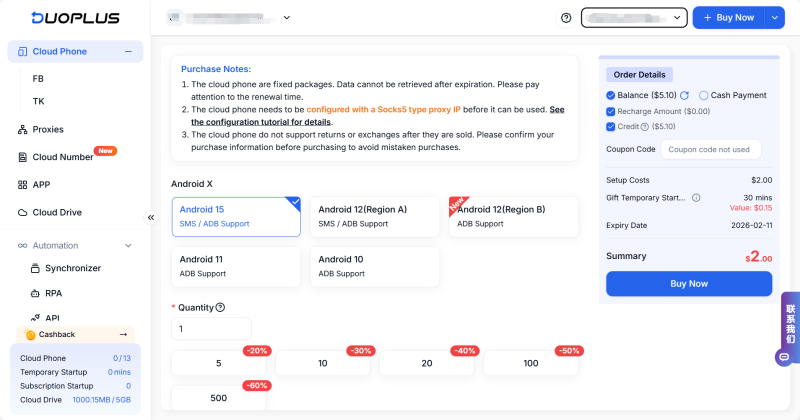
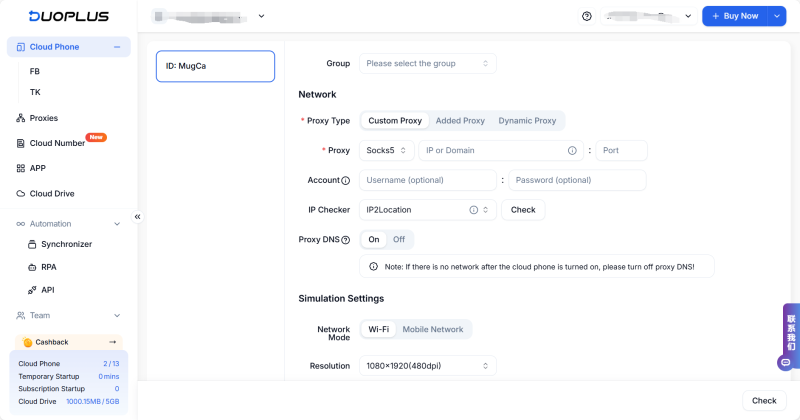
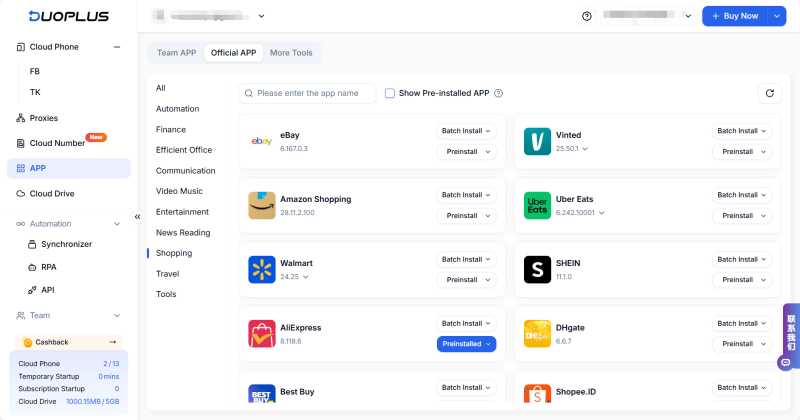

Whether choosing Temu or AliExpress, the quality checks focus on cost, efficiency, and risk control. As cross-border e-commerce continues to expand across multiple platforms and styles, defining operational stability and high execution capabilities is essential. Only combining platform strategies, supplier management, and account security can ensure optimal performance even within aggressive global competition and actual long-term growth.
DuoPlus Cloud Phone
Protect your multiple accounts from being
A lot of people still approach multi-account management the way it worked a few years ago — create several profiles, add …
If you've been trying to reach users in Russia via WhatsApp or Telegram, you may have noticed things aren't as smooth as …
No need to purchase multiple real phones.
With DuoPlus, one person can operate numerous cloud phones and social media accounts from a single computer, driving traffic and boosting sales for you.