


How to Sign Up for Meta Muse and Use a Referral Code
Muse has recently become one of the most talked-about AI Agent products in the AI tools space. As a new AI Agent from …
Learn how to schedule Instagram posts and Reels using Instagram's native scheduling feature, Later, Buffer, Metricool, and Hootsuite. Compare their strengths in content planning, multi-platform publishing, analytics, and team collaboration to find the right Instagram scheduling tool for your workflow.

Get an AI-Powered Summary of This Article
Instagram content requires consistent publishing, especially when you regularly post Reels and feed content. Manually uploading every post at the exact publishing time can easily disrupt your content plan and requires you to repeatedly handle media files, captions, and publishing times.
Instagram already provides built-in scheduling features. However, when you need to manage multiple accounts, publish across different social platforms, or analyze content performance in more detail, a dedicated Instagram scheduler can make the workflow much easier.
This article introduces several commonly used Instagram scheduling tools and explains what each one is best suited for.
An Instagram scheduling tool allows you to prepare content in advance and set a specific date and time for publishing. At the scheduled time, the content can either be published automatically or trigger a notification asking you to complete the publishing process.
There are two main ways to schedule Instagram content. The first is Instagram's own scheduling feature, while the second is using third-party social media management tools such as Later, Buffer, and Metricool.
Third-party tools usually go beyond basic scheduling by adding features such as content calendars, batch management, cross-platform publishing, and analytics.
Instagram's built-in scheduling feature allows you to schedule posts, carousels, and Reels directly within Instagram. Content preparation and publishing can both be handled inside the platform without connecting a third-party service.
If you only manage one or a few accounts and usually prepare several days or a week of content in advance, Instagram's native scheduler is often enough. For accounts with a relatively straightforward publishing schedule and no need for cross-platform management, there is little reason to add another scheduling tool.
How to schedule an Instagram post or Reel:
For users managing one Instagram account, the native scheduling feature can usually handle basic publishing needs. Once you start managing multiple platforms or accounts, however, third-party scheduling tools become more useful.
Instagram scheduling tools are designed around different workflows. Some focus on planning visual content, some make it easier to manage several social platforms from one place, while others combine scheduling with analytics and team collaboration.
The right choice depends on how you currently manage content: whether you run one account by yourself, manage multiple accounts and platforms, or need analytics to guide future publishing decisions.
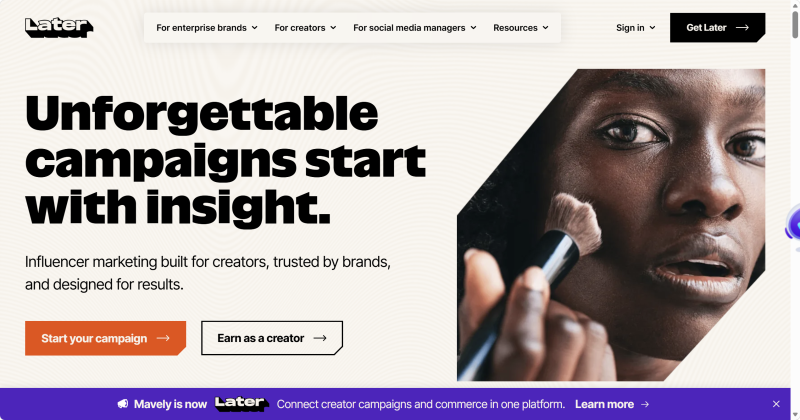
Later's content calendar lets you arrange prepared images, carousels, and Reels according to their scheduled publishing dates. You can adjust the order of posts directly in the calendar and preview how the content will look together on your Instagram Feed.
This is particularly useful when you plan content several days or weeks in advance. For example, if you already have a collection of product images and Reels ready to publish, you can add them to the calendar first and then adjust their order based on your publishing schedule.
The Feed preview also makes it easier to maintain a consistent visual style and content rhythm across the account.
Later also provides Linkin.bio, which can connect Instagram posts with external links. For accounts that rely heavily on Feed content to guide users toward products or other destinations, this can be useful.
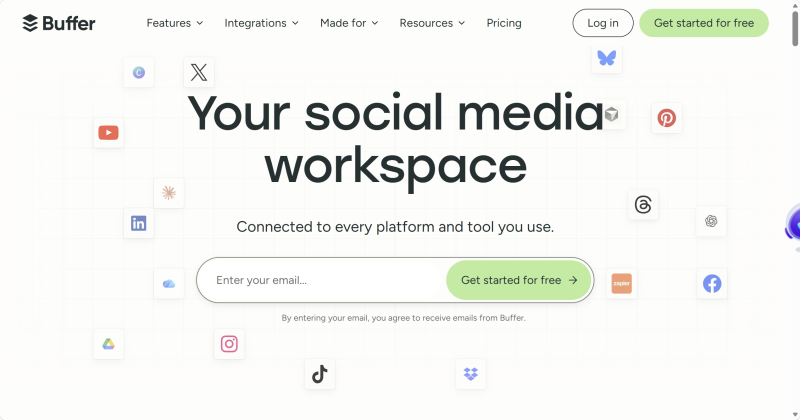
Buffer supports Instagram, Facebook, LinkedIn, TikTok, and other platforms, allowing you to manage publishing schedules across different social networks from one place. You can set different publishing times for each platform and adjust captions or content formats when necessary.
For example, if a brand campaign needs to be published on both Instagram and LinkedIn, you can create separate publishing tasks in Buffer, prepare an image or Reel for Instagram, adapt the copy for LinkedIn, and assign different publishing times.
Buffer is particularly straightforward if your preferred workflow is based around a publishing queue. You can add prepared content to the queue, assign publishing times, and let the scheduled posts go out according to the plan.
For individuals and small teams that do not need complex content planning or advanced analytics, this approach can be enough.
Metricool combines content scheduling with account analytics, making it useful when you want to use past performance to plan future content.
After scheduling Instagram posts and Reels, you can continue to monitor how they perform, including engagement and video performance. This allows your publishing plan to be adjusted based on actual results.
For example, if a particular type of Reel consistently generates more views or engagement, you can use that information when planning your next batch of content. If certain publishing times repeatedly perform better, those time slots can also be considered for future scheduling.
Metricool also supports analytics for platforms such as TikTok, making it suitable for creators and marketers who already have an established content schedule and regularly review account performance.
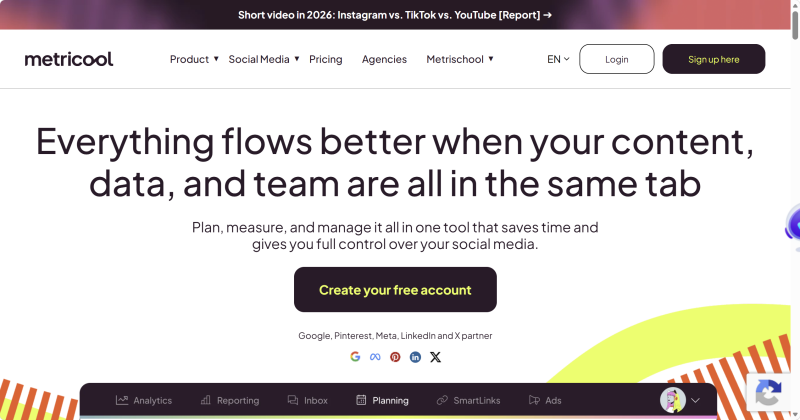
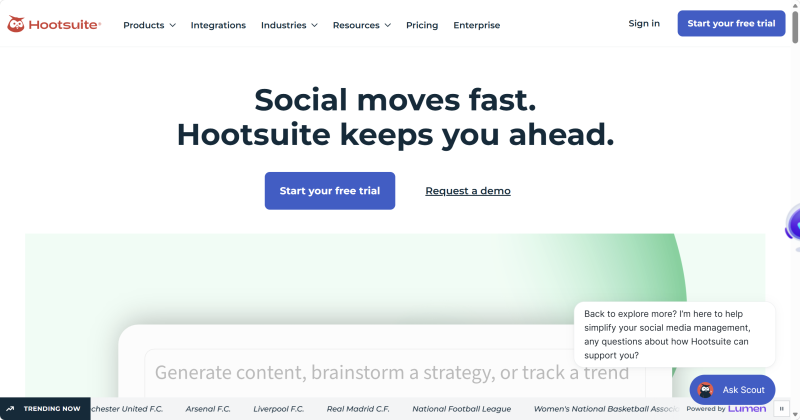
Hootsuite is better suited to organizations managing multiple accounts and social platforms. It provides a centralized content calendar as well as features for team management and content approval.
This becomes useful when several people are involved in the publishing process. For example, a content creator can prepare the media, a social media manager can schedule it, and another team member can review the content before publication.
Instead of relying on separate messages to confirm whether content has been reviewed or when it should be published, the workflow can be managed within the same platform.
For someone managing one or two Instagram accounts, these features may be unnecessary. For businesses, agencies, and teams managing multiple brands and platforms, they can make the publishing workflow much easier to organize.
| Tool | Main Advantage | Best For |
|---|---|---|
| Instagram Built-in Scheduler | Simple and officially supported by Instagram | A few accounts and regular Instagram publishing |
| Later | Content calendar and Feed preview for planning the overall content layout | Accounts that care about Feed presentation and content planning |
| Buffer | Simple scheduling across multiple social platforms | Users managing Instagram and other social platforms |
| Metricool | Combines scheduling with analytics to improve future content planning | Users focused on performance analysis and content optimization |
| Hootsuite | Centralized scheduling, approval, and team collaboration | Businesses, agencies, and teams |
One thing to keep in mind is that automatic publishing does not necessarily mean every type of Instagram content can be published without any manual action. Depending on Instagram's API limitations and the features used in a post, content involving certain music, interactive stickers, or other native Instagram features may still require a notification-based publishing process.
Scheduling content in advance can make publishing much easier, but the workflow does not end once a post has been scheduled. Different tools support different content types, publishing methods, and account management features, so it is worth checking how a tool handles your specific content before relying on it for regular publishing.
For a single Instagram account, a scheduling tool can handle most publishing tasks. Once you start managing multiple accounts, however, scheduling becomes only one part of the workflow.
Before content can be scheduled, you may also need to deal with account registration, login, device management, network configuration, and media preparation. After publishing, performance analysis and ongoing account management still need to be handled.
A typical multi-account workflow can therefore be organized as:
Account & Device Management → Content Creation → Media Organization → Content Scheduling → Publishing → Performance Analysis
DuoPlus Cloud Phone focuses on the account-side environment, including device and network management.
Different Instagram accounts can run in separate cloud phone environments. Each account can have its own device environment for login and daily operations, reducing the need to repeatedly switch between different accounts on the same physical device.
As the number of accounts grows, cloud phones can also be organized by account, brand, or business line so that each account has a clearly defined operating environment.
Daily Instagram account management also involves network configuration. DuoPlus supports proxy configuration for cloud phones, allowing you to set up the appropriate network environment based on the operational requirements of different accounts.
This makes it easier to keep accounts, devices, and network configurations organized together and identify which device and network configuration belong to each account.
Managing multiple Instagram accounts can quickly become time-consuming when every device has to be handled separately.
DuoPlus allows multiple cloud phones to be managed from a centralized dashboard. You can perform actions such as powering devices on or off and restarting them, while also checking their current status from one place.
As the number of accounts grows, this reduces the need to handle every device individually.
If you only need to schedule a few Instagram posts or Reels in advance, Instagram's built-in scheduling feature is usually enough. As your content volume grows, you can choose Later, Buffer, Metricool, or Hootsuite based on the part of your workflow that needs the most improvement.
The important question is not how many features a scheduling tool offers, but whether it can reduce the work that currently takes the most time.
For accounts that publish Instagram content consistently, scheduling is more than simply making posts go live automatically. It helps organize media, publishing times, and performance reviews into a more consistent content workflow.
Generally, yes. Scheduled posts and Reels can usually be edited, rescheduled, or canceled before they are published. The exact process may vary depending on whether you are using Instagram's native scheduler or a third-party tool.
Many third-party scheduling platforms support multiple Instagram accounts, although the number of accounts may depend on the subscription plan. If you manage several accounts, check the plan's account limits, publishing quotas, and team-member restrictions before choosing a tool.
Storage policies vary between scheduling platforms. Before connecting an account, review the provider's privacy policy and data-handling practices, especially if you are managing business accounts or sensitive brand assets.
Using Instagram's scheduling feature does not inherently reduce the reach of a post simply because it was scheduled. Performance still depends on factors such as content quality, audience engagement, and publishing time.
Muse has recently become one of the most talked-about AI Agent products in the AI tools space. As a new AI Agent from …

OpenAI Codex is an AI coding agent designed to help developers write, modify, review, and deliver code. It is available …
VK (VKontakte) is one of the major social media platforms in Russia. In addition to account management, content …
No need to purchase multiple real phones.
With DuoPlus, one person can operate numerous cloud phones and social media accounts from a single computer, driving traffic and boosting sales for you.