


How to Sign Up for Meta Muse and Use a Referral Code
Muse has recently become one of the most talked-about AI Agent products in the AI tools space. As a new AI Agent from …
Discover how AI is revolutionizing TikTok content production. Learn how to optimize workflows from AI-assisted script generation and structure-led editing to multi-account execution and automated publishing with DuoPlus Cloud Phone.

Get an AI-Powered Summary of This Article
TikTok content production is entering a new stage.
For teams that publish consistently, the challenge is no longer just how to make a single video. The real issue is how to produce content at a steady pace, at higher volume, and within a system that can scale over time.
As posting frequency increases, the weaknesses of traditional workflows become more obvious. Topic selection often depends on manual judgment. Scriptwriting still relies on hand-built outlines. Editing depends on collecting and stitching together assets. Publishing, analysis, and account management are often spread across different tools. For a single account, that process may still be manageable. But for teams running multiple TikTok accounts, testing content at scale, or managing account clusters, this workflow becomes difficult to sustain.
In TikTok’s 2026 trend materials , the platform highlights tools such as TikTok One Insights Spotlight, TikTok Market Scope, TikTok One Content Suite, and Symphony Creative Studio to connect trend discovery, content exploration, creative generation, and performance analysis more closely.
This signals a broader shift: AI is no longer limited to assisting with individual creative tasks. It is becoming part of a larger content workflow. As a result, TikTok production is moving away from one-off video creation and toward a more structured content system.
The scripting stage is usually the starting point of TikTok content production, and it is also one of the most subjective parts of the workflow.
In a traditional process, a team selects one topic, writes one version of the script, and then moves on to filming or editing. But in TikTok’s current content environment, that approach leaves very little room for testing. When a topic has only one version, it becomes much harder to evaluate which angle, hook, or structure actually fits current audience interest and platform momentum.
At this stage, AI is most useful in three areas.
AI can help organize potential content directions by analyzing keywords, comment patterns, high-performing video structures, and search intent. The purpose is not to replace human judgment, but to reduce research time and help teams build a stronger topic pipeline more efficiently.
Around one content idea, AI can quickly generate multiple hooks, different opening angles, and several narrative structures for testing. For example, the same topic can be framed as a result-first video, a problem-solution format, a contrast-based hook, or a step-by-step breakdown.
Instead of writing one complete script and treating it as the final version, AI can help create multiple variations of the same idea. These versions may differ in pacing, sequence, CTA placement, and video length. The value here is not simply making one script better. It is expanding the team’s testing range.
From a TikTok operations perspective, the most important role AI plays during scripting is not just writing faster. It helps teams build a group of script assets that can be tested, filtered, and refined over time.

In most TikTok teams, the most time-consuming part of the workflow is not scripting. It is editing.
In high-frequency production environments, editing teams often face the same issues repeatedly: not enough usable footage, slow turnaround when extra shots are needed, too many repetitive tasks, and limited reuse across similar content formats. As content volume grows, these issues gradually become major efficiency bottlenecks.
AI is changing that process in a meaningful way.
Using tools such as CapCut Video Studio as an example, AI-assisted workflows are moving short-form editing away from pure asset stitching and toward structure-led production. In the past, editing often started with whatever footage was available, and the final video had to be built around those limitations. With AI involved, teams can begin with the script and target pacing, generate a rough content framework, and then decide which assets are needed, which sections require additional clips, and which parts should be reinforced.
This shift changes the editing workflow in several ways.
Teams can define the content structure first and then fill in the required assets, rather than being constrained by whatever footage already exists. This makes editing more standardized and less dependent on rebuilding the process from scratch each time.
When original footage is incomplete, AI can help create explanatory visuals, transition shots, or supporting clips. That reduces the production team’s dependence on an existing asset library.
In practice, much of the editing time is not spent on creative decisions. It goes into transitions, pacing adjustments, subtitle cleanup, audio matching, and other basic production tasks. These repetitive steps are often better handled by AI, while the team focuses on storytelling, presentation, and final review.
For TikTok content teams, the main value of AI in editing is not fully automated video production. It is making editing more reusable, repeatable, and operationally efficient.
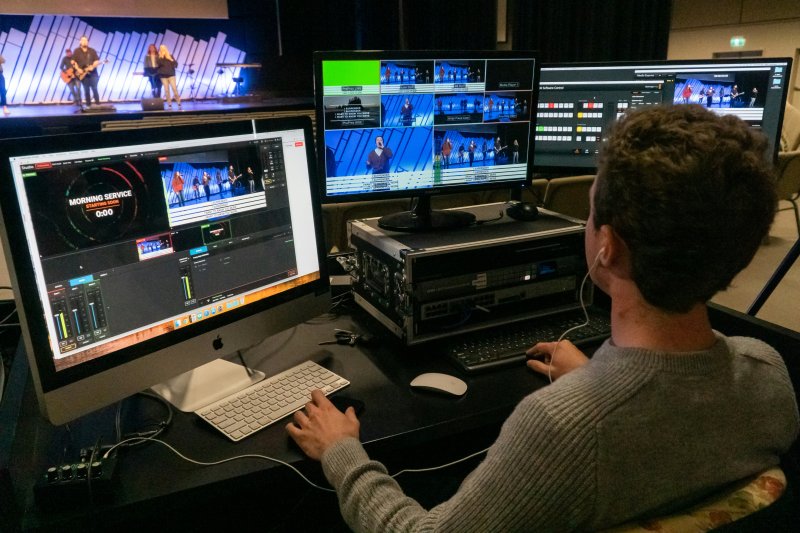
Publishing is not the end of the content workflow. It is the beginning of the next optimization cycle.
Once a TikTok video goes live, the most useful information starts to appear through views, engagement patterns, comment direction, and performance differences across versions. That data becomes an important input for the next round of scriptwriting and editing.
TikTok Studio is increasingly serving this purpose. It helps teams manage content while also providing the performance signals needed for optimization.
From an operations standpoint, post-publishing analysis usually plays three roles.
Instead of waiting for final view counts, teams can look at earlier indicators such as opening retention, engagement patterns, and comment response. These signals often provide a more immediate view of whether a content structure is working.
When different versions of the same topic perform differently, teams can better understand whether the problem came from the script, the edit, the publishing schedule, account allocation, or execution timing.
Comments, engagement, and overall content performance should not be treated as reporting material only. They should feed directly into the next round of topic selection, script generation, and video editing.
That is how TikTok production evolves from one-time output into a loop of publishing, analysis, adjustment, and republishing.
Once AI improves scripting speed and editing efficiency, a new bottleneck usually appears quickly.
That bottleneck is no longer creativity. It is execution.
For teams managing multiple TikTok accounts, the most common challenges include higher device management overhead, inconsistent publishing schedules, repetitive manual tasks, fragmented workflows across accounts and devices, and difficulty evaluating performance clearly across accounts.
These issues may not feel critical in a single-account setup. But for teams managing multiple accounts , affiliate campaigns, or large-scale content testing, they become much more significant over time.
In other words, AI can improve how content gets created, but it does not automatically handle how content gets executed. Once a team moves into high-frequency, multi-account, long-term publishing, the stability of the execution system has a direct impact on whether the entire workflow can continue to scale.
When scripts, content assets, and video versions can already be generated or accelerated by AI, account operations and publishing workflows can also benefit from the right operational tools.
For teams running multiple TikTok accounts, DuoPlus Cloud Phone fits naturally into this stage as an execution layer.
DuoPlus Cloud Phone provides independent cloud-based Android environments for TikTok accounts. This makes it easier to separate account environments and avoid managing everything through repeated switching on local devices.
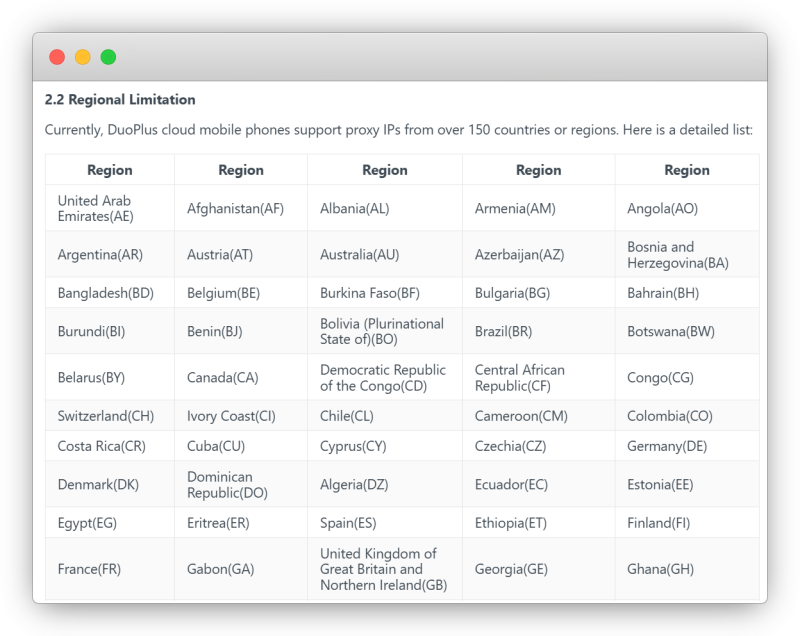
DuoPlus Cloud Phone supports features such as synchronized actions, RPA workflows, and AI assistant capabilities, which can help teams handle batch operations across multiple accounts more efficiently. That includes tasks such as automated account warm-up , content publishing, and other repeatable workflows.
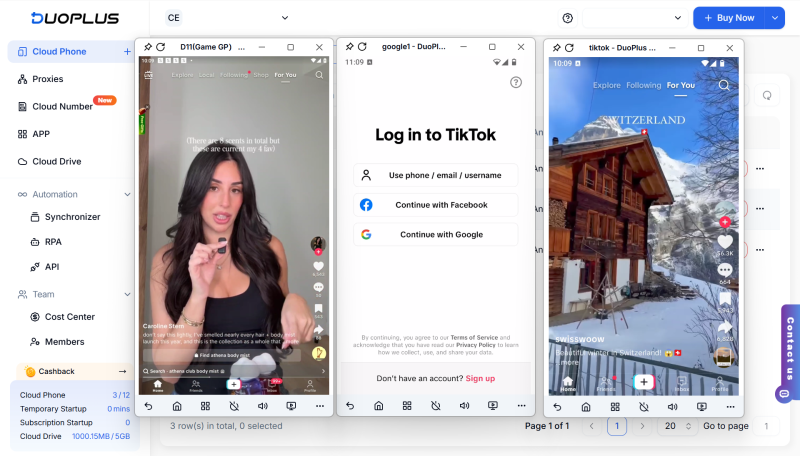
For TikTok teams, sustainable growth is not only about producing more content in the short term. It also depends on whether the workflow can keep running in an organized way over time. DuoPlus Cloud Phone helps provide a more stable login environment for each account, reduces disruption caused by constant device switching, and supports centralized cloud-based management for multi-account operations.
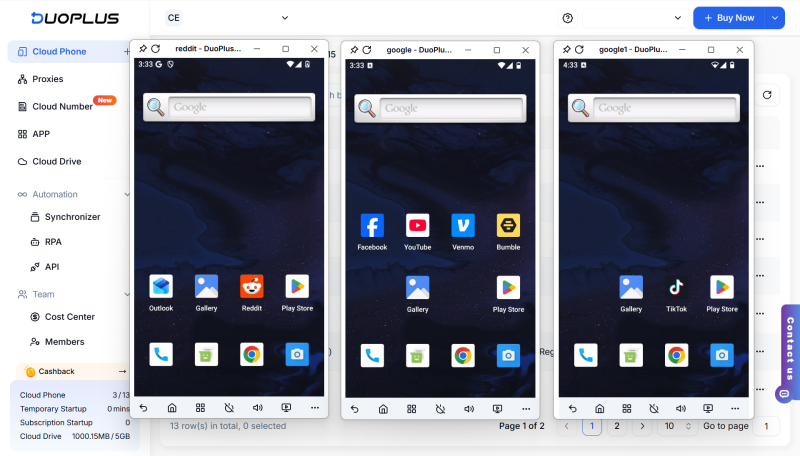
The value of DuoPlus Cloud Phone is not in changing the creative direction of the content itself. Its role is to help teams execute an established workflow more consistently.
Put simply, AI helps answer what to create and how to generate it, while DuoPlus Cloud Phone helps answer how to keep that system running at scale.
The shift in TikTok content production is not only about having access to more AI tools.
The bigger change is structural. TikTok production is moving from a set of disconnected creative tasks toward a workflow that can run as a system. AI improves the speed of script generation and editing. Platform tools provide clearer trend and performance signals. DuoPlus Cloud Phone helps connect those capabilities into a more stable operational process.
When scripting, editing, publishing, analysis, and execution are all managed within the same workflow, content is no longer just a one-video output problem. It becomes something that can be repeated, optimized, and scaled over time.
Muse has recently become one of the most talked-about AI Agent products in the AI tools space. As a new AI Agent from …

OpenAI Codex is an AI coding agent designed to help developers write, modify, review, and deliver code. It is available …
VK (VKontakte) is one of the major social media platforms in Russia. In addition to account management, content …
No need to purchase multiple real phones.
With DuoPlus, one person can operate numerous cloud phones and social media accounts from a single computer, driving traffic and boosting sales for you.